Written by Anna Thabuis.
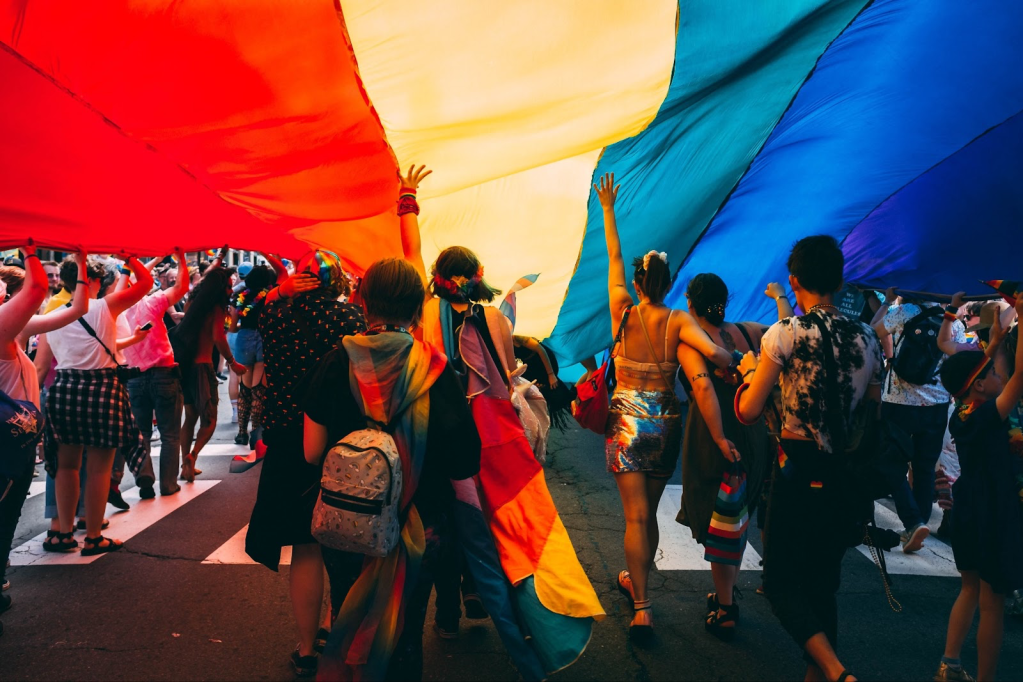
Picture by Mercedes Mehling.
Menstruation and Queer identities are subject to several myths that may give rise to biases and prejudices against the Queer community. The intersection of queerness and menstruation has seldom been discussed and has been largely ignored in mainstream conversations. However, it is a topic that needs to be talked about, as it is an essential part of the experience of many Queer individuals. Understanding the experiences and needs of Queer menstruators is crucial for a more inclusive society, advancing menstrual equity, and providing proper healthcare.
One widespread myth that erases the experiences of trans and non-binary people who menstruate is the notion that menstruation is only experienced by cisgender women. Society’s narrow understanding of gender and the categorization of biological functions based on binary gender roles has led to many biases and misconceptions regarding queerness and menstruation. Due to cultural norms that centre on heteronormativity, Queer identities are frequently the topic of misunderstandings. The LGBTQ+ community is incredibly diverse and there is no universal Queer experience, yet society tends to classify identities and experiences into binary categories. These boxes and misconceptions about gender identities hinder our ability to achieve period equity.
Menstruation can be extremely stressful for trans, non-binary, and gender-non-conforming menstruators, especially those who need menstrual products. Many menstrual products are designed and marketed with cis-gendered women in mind which can cause discomfort and dysphoria and further marginalize individuals. The close association between periods and womanhood can also lead to individuals avoiding buying products. Yet, when menstruators do not use safe menstrual products, they run the risk of developing urogenital infections, skin rashes, and other vaginal conditions. Furthermore, poor mental health outcomes, such as heightened anxiety, sadness, and distress, are associated with the emotional toll brought on by lack of access to menstrual products. On the other hand, more masculine spaces are not equipped to support menstruation. Oftentimes, men’s bathrooms do not have waste bins to dispose of menstrual products in the stalls safely. Given that many Queer individuals avoid public bathrooms due to fears of confrontation or harassment, the lack of privacy to discard period products can put individuals at risk and overall contribute to making public spaces unsafe for trans, non-binary, and gender-non-conforming people
Period poverty also hits the Queer community harder due to rampant experiences of poverty linked to intolerance and economic discrimination. It is estimated that in comparison to the general population, trans individuals are more than twice as likely to live in poverty and are three times as likely to experience unemployment, which can increase their likelihood of experiencing period poverty. Race and ethnicity also impact the risk for Queer people to experience poverty, with an estimated four out of ten Black transgender individuals and nearly half of Latinx transgender adults living in poverty in the United States. These limited economic opportunities are deeply tied to the systemic discrimination against Queer folks that seeps into the workplace. This prevalence of poverty has severe repercussions for the well-being of trans, non-binary, and gender-non-conforming menstruators, as they may not have the financial means to purchase menstrual products. The negative health outcomes associated with inadequate menstrual care further the cycle of poverty and marginalisation experienced by trans, non-binary, and gender-non-conforming menstruators.

Picture by Brian Kyed.
Besides the design and marketing of menstrual products to make them more inclusive (and affordable) for trans, non-binary, and gender-non-conforming menstruators, we should also be conscious of the language used when discussing menstruation and period poverty. Prioritizing gender neutral terms such as “menstruators” or “people that menstruate” rather than “women” and “girls” helps dissociate menstruation from womanhood in a way that helps create a more safe and inclusive space for all those that menstruate as well as the women who do not have their periods.
All genders and identities need to be included in the discussion of periods and period justice. This entails improving access to the appropriate knowledge and dismantling taboos. We must also work to make period education, products, and health care more inclusive, to facilitate access to menstrual health for all. On an individual level, it is important to encourage those who identify as Queer to embrace their identities and for allies to be open to hearing their experiences and bolstering their voices.


Leave a comment