Before I set off for my internship in Togo – in fact before I was allowed to go anywhere at all, I had to complete a series of mandatory briefings and courses. There were the safety and security ones, the ones about partnerships and methods; but equally as important, were the ones on safeguarding and communication. I was briefed on how to operate and communicate ethically as part of a global health project. Most of the guidance was simple and straightforward, but the fact that an entire briefing was dedicated to ethical storytelling highlights first, how important and relevant it is to the work we do within global health; and second, the challenges we still face when it comes to offering respectful accounts of what we do, the places we visit and the people we meet.
These challenges are nothing new. Global health has been accused of being “old wine in a new bottle” when it comes to issues of colonial legacy, representation, and power. Narratives of the more ‘developed’ and ‘sophisticated’ Global North, and the “less developed’ Global South, can be found in organisational campaigns and increasingly on social media platforms through posts and images of poverty. These narratives can recreate harmful stereotypes and norms that have the potential to shape attitudes, assumptions and behaviours (see our other piece on ‘poverty porn’). They also have the capacity to inadvertently put people at risk or disadvantage and invade their privacy. With all this in mind, it becomes relevant to look at our own personal global health accounts as part of a bigger picture.
Oftentimes, our journeys take us to parts of the world that are different to the places we call home. This could be our first job after graduation or an internship abroad; and understandably, the excitement of travel can make anyone reach for their phone or camera and go on a “happy go lucky”- spree of “capturing the moment”. But, it is time we stop and think about the impact of these photographs and the narratives they support; – especially when our work often relates to those who occupy vulnerable or marginalised positions in society. The stories we tell should be empowering, transparent, and truthful.
This article outlines the start of an unfinished list of principles that we should keep in mind throughout our journeys to reflect more deeply and evaluate how we go about storytelling, research and engagement for global health. Some describe these kinds of principles and reflections as a process of ‘reflexive dialogue’ which challenges us to first: engage in a self-critique on how we interpret and produce accounts, and second: engage in a social-critique of the consequences of our accounts in terms of benefit, usefulness and ethics. For us at Eye on Global Health, it forms the basis of an important ongoing conversation that we are having on the Do’s and (Please) Don’ts of ethical storytelling.
Do No Harm
In research, we are familiar with the concept of ‘do no harm’ as a protective principle to respect the autonomy of participants. It involves full transparency of their involvement and the right to withdraw their participation at any time. Yet, I believe we should expand this concept to cover all interactions we have with partners, participants and bypassers during our journey. That includes thinking about the potential damage your image or stories could do – not just personally in terms of that handful of photos you take, but in the grand scheme of things,- the “Big Picture” if you will.
In an article titled How (not) to write about Global Health, Jumban describes how; “One week in a country or community is a significant experience and exposure to the intricacies of a particular culture for you to be able to write about that country or community’s problems and propose solutions. With 1 week on the ground, you’ll get the general idea. Lots of poverty and death, helpless people, corrupt national or local governments, something about colonialism, and oh yes, weak health systems. You get the idea.”
And unfortunately, we do get ‘the idea’ or at least ‘that idea’, which is the problem. That particular idea fails to capture all the others. It presents a flat, oversimplified version of reality; something easy to communicate and digest; something that also feels familiar and echoes the narratives we are comfortable with. This is something we at Eye on Global Health have talked about in terms of fundraising campaigns and the negative impacts of reaffirming harmful stereotypes. Jumban, too, talks ironically about the danger of ‘the idea’ in the context of research papers and outputs; but I think the point is just as relevant for other forms of storytelling- especially with the rise of social media. It is arguably easier to click ‘post’ than to submit a paper, afterall; often simpler stories about suffering can seem more reshareable than complex analyses of social realities.
Next time you visit a new location, instead of snapping an image that will help reinforce a stereotype of a people, culture or country, challenge yourself to take an image you’ve never seen before. Try to capture genuine stories that encourage a sense of dignity and are honest portrayals of life. Include information like: who is in the picture and where they are. Whatever you decide to take a picture of, just make sure to question your intentions: Why did you decide to share that photo? Consider the impact your post will have on the people in the picture. Could they suffer any harm? Are they benefitting from your actions? If so, how? And of course, ask if you are allowed to capture it at all and share that information.
Respect and Informed Consent
When we travel in any capacity and to any distance, we are stepping into someone’s everyday life. Your status as an outsider, traveller, or tourist does not give you the right to document everything, anyone and anything. Besides ordinary courtesy, it is absolutely essential to ask for consent from someone before you photograph them or any aspect of their life. Imagine a stranger snapping a photo of you going about your daily errands on an ordinary afternoon. Ask yourself: how would you feel? Uncomfortable? Confused? Alarmed, or as though your privacy had been invaded? Then fast forward and imagine that that same person wandered off happily into the distance, and you had no clue where or what your photo would be used for, or where it would even end up. Sometimes putting yourself in someone else’s shoes is the best way to see just how wrong that entire scenario seems. As for children and young people, their guardians should also be consulted when it comes to photographing them and telling their stories. That is the case for ethical research, and it is also the case here. For example, in preparation for my trip to Togo, we were advised to firstly seek consent from the child’s guardian when capturing photos and secondly, ensuring that the image we took was respectful, dignified and protected the person’s privacy. This meant giving the family an opportunity to prepare themselves for the photo, for example if a child was not fully dressed and informing them on where the image would end up and be used for; and of course giving them the opportunity to say no.
This notion of respect and consent is just as relevant for many sites and objects too. From my time living in Australia, I learnt that many parts of the landscape are sacred sites for Indigenous communities and require the permission of traditional landowners to enter and photograph. While in Togo, I was told by my colleagues that statues and shrines for Voodoo practices were strictly prohibited to photograph. This kind of knowledge on cultural significance is deeply rooted in context and often difficult to grasp at first glance; but, it is your job as a visitor to take the time to orient yourself in a way that respects local customs, traditions and beliefs.
Dignity and Safeguarding
The ideas of dignity and safeguarding are closely linked to how we talk about respect in terms of autonomy, protection and justice in global health research. This extends to the respect in time and energy a person dedicates when interacting with you, and the mutual benefits you both gain from the exchange to avoid exploitation. Dignity here refers to the respect of equality and the unconditional value of everyone. In this sense, it is often seen as the cornerstone of human rights while safeguarding is the obligation and measures that should be taken to protect the rights and well-being of people, especially those considered vulnerable; – like children, youths and marginalised communities. Following the principles of dignity can include protection from sexual harassment, exploitation, abuse and neglect as well as taking special care to account for intersectional vulnerabilities and identities. Practically, this can mean respecting the privacy of marginalised, criminalised or stigmatised groups by not photographing them, posting their image or disclosing their location; – which could be dangerous in cases where they’re recognised by others in their community. This could be a relevant case for marginalised genders or undocumented migrants who may wish to keep their identities hidden. Power plays a large role here, especially in cases where communities or individuals may feel as if they have less agency to refuse or withdraw their consent for a photo because they feel intimidated by someone or what they represent; whether that be one’s status, educational background or institutional affiliation. In this sense, power defines agency, and determines whose voices are heard, whose faces are seen and whose stories get told – and how.
The UNESCO Universal Declaration on Bioethics and Human Rights codifies safeguarding principles by stating the importance of not infringing upon human dignity, human rights and fundamental freedoms (Article 12). Very tangibly, this means treating everyone as equal and not viewing anyone or any place as lesser or of less value. It means treating all the interactions you have along your global health journey as extensions of how you would like to be treated, and that is in very simple terms, with respect.
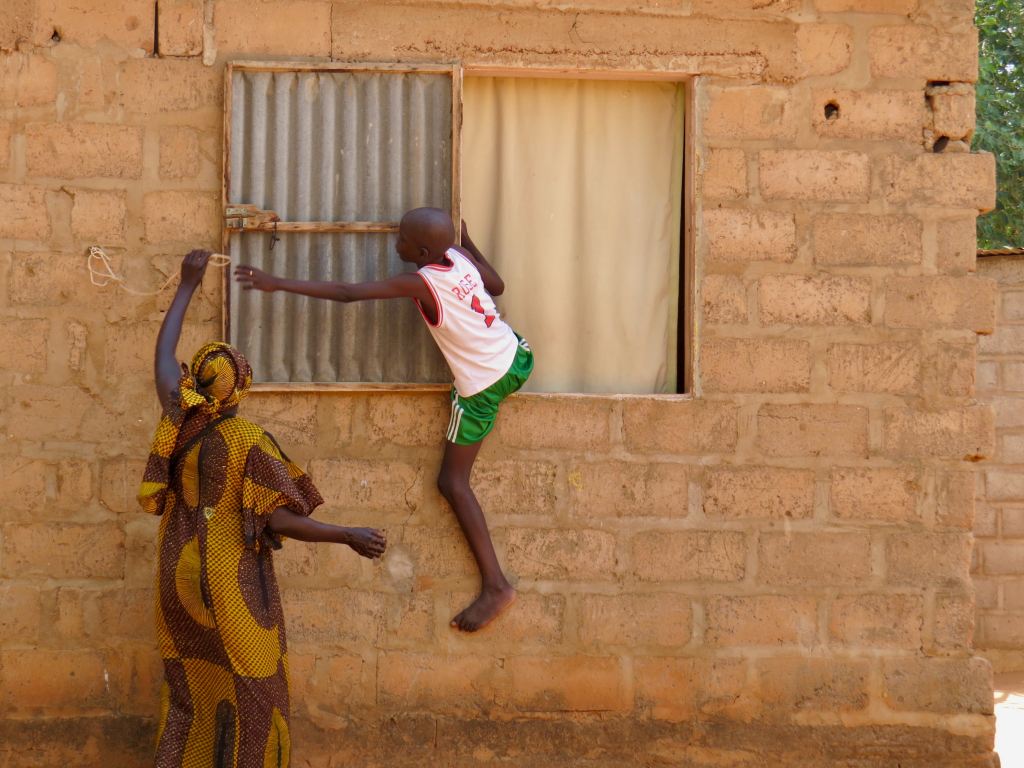
“The perspective of the observer is always limited and determines what can be seen”
Some final thoughts to consider here are the ideas of reflectivity and representation. No one is neutral and neither are the stories and images we share, in fact everything is informed by our own background, past experiences and identities. Reflectivity is often discussed within qualitative research but it’s also a consideration worth taking into the land of storytelling: when sharing stories online, you have to acknowledge that your perceptions have shaped what and how you have chosen to document, interact with and report on people and places. Besides helping us reflect on the choices we make, reflectivity creates a healthy sense of responsibility to be ethical, honest and respectful storytellers in all spaces – whether that be our personal social media accounts, casual conversations, or within our institution’s. At Eye on Global Health, we try to tell inclusive and representative stories that engage with relevant topics and draw on the personal experiences and views of the authors – and that is all rooted in the ideas and principles I’ve shared above.
So, make sure that throughout your global health journey – from the moment you step out your front door, you are considerate of the people and spaces that you come across. Before, during, and after you photograph or share something, always ask: Do I have informed consent (am I allowed to)? Am I being respectful (should I)? And to what effect (dignity and safeguarding)?



Leave a comment