By Jo-Ann Caberoy and Emerson Fababaer of Child Champion
This time of the year, the Philippines welcomes you with dry heat and skyscrapers everywhere. The bustling streets and endless traffic add to what they call ‘Congested City Life’. The Philippines Statistics Office (2022) states that 54% of Filipinos live in these urban areas. The expansion of urban areas can bring about economic benefits, improved education, and better healthcare, but also a host of challenges unique to urban living.
When Buildings Replaced the Greens
Imagine being born in a community void of gardens and local parks. This is the sad reality for most Filipino children. They are being brought up in big shopping malls, man-made parks and recreation areas. As a result, they are no longer familiar with the local plants and green leafy vegetables, and they have yet to experience playing in the mud when it rains. A report released by UNICEF in 2021 suggests that the country is heading toward an “obesogenic environment”: an environment which promotes the consumption of highly dense food and a sedentary lifestyle, common to people living in urban areas.
Bridging the Gap: From Disconnection to Food Literacy
At Child Champion – a youth-focused social development start-up – we are deeply committed to fostering learning and co-creation by turning schools and communities into an ecosystem of co-creation through innovative programs and initiatives. We strive to empower the Filipino youth to be co-creators of a sustainable and healthy environment.
Whenever I met with my colleague at Child Champion, who happens to own a primary school in the city, we both noticed that most of the students’ lunch packs lacked colour and were mostly purchased from fast food chains. Our curiosity about the children’s lunches led to us conducting an observational study of the students’ lunch packs over 2 weeks, which highlighted the prevalence of nutritionally deficient foods in children’s lunches. This is a concerning issue as the Philippines, being an agricultural nation, seems to have a growing disconnect from locally produced Filipino foods and healthy eating habits.
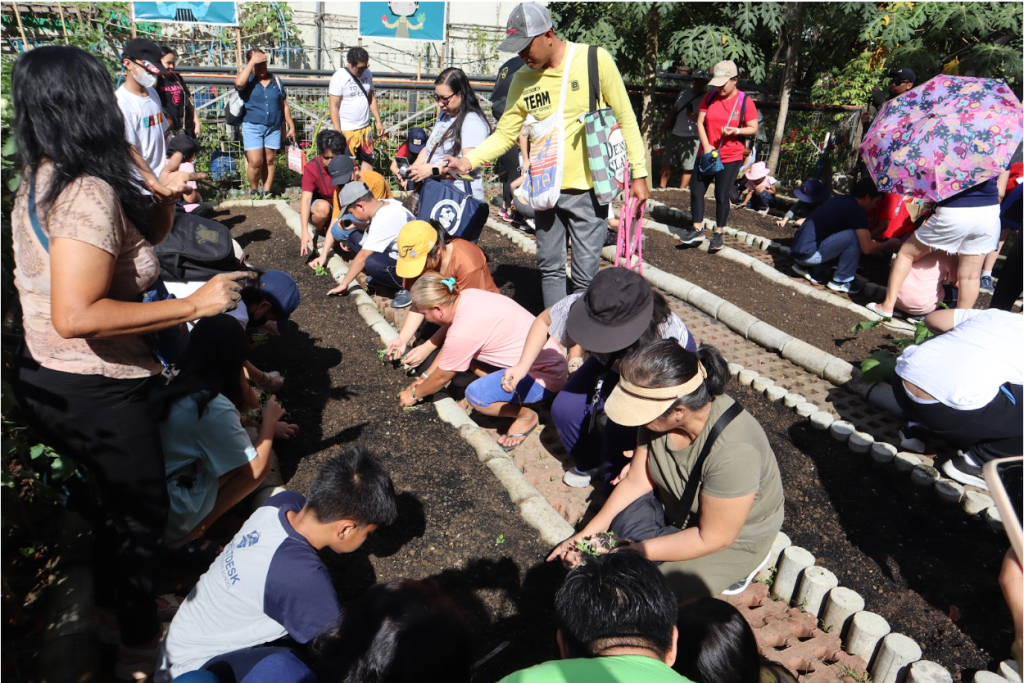
An urban farming initiative ’Halina na sa Hardin, Tayo ay Magtanim’ (Come to the Garden, Let us plant Together) was facilitated by Child Champion in partnership with schools, students, parents, the city government’s office, and the local rainforest park administration. Those of us working on the day of the first activity realised that this initiative wasn’t merely informative; it was immersive. Local experts were present to teach and demonstrate the basics of urban farming, including composting and seedling propagation. All learned about the local vegetables suitable for small spaces and high-rise buildings and how to plant tomatoes and chilli with the right depth into the soil. The children, parents and even school staff got their hands dirty and planted seedlings in the allocated lots for planting, guided by local farmers. The support of the City Environment and Natural Resources Office (CENRO) and the Rainforest Park in providing urban farming tools, land, and people was well appreciated by the students and parents. This hands-on experience instilled a deeper appreciation for the work involved in growing food and fostered a connection with nature often absent in urban environments. The activity resonated deeply with parents who actively supported their children, demonstrating their commitment to a sustainable future and setting an example through action. The most exciting part? Participants can return to the rainforest park garden to witness their plants flourish and reap the harvest of their efforts.
Living Lab: From Theory to Seedling
It is not just about planting and fun. This program was inspired by the living lab method: a method of transforming schools and communities into an ecosystem of co-creation, through the collaboration of citizens, local actors and other stakeholders with diverging interests but with common objectives (Nyström et al., 2014). As part of the learning process, students and parents were given a task to brainstorm and design a sustainable urban farm fit for school or home. Each group led by students presented their ideas using drawings and explained the vital elements needed for their sustainable urban farm. Their designs incorporated the importance of responsible water and soil management, the use of natural pesticides from food waste and organic farming methods. The student’s and parents’ enthusiasm and creativity were evident in their presented designs. However, the program did not end there. The office of CENRO sent a set of complete urban farming tool kits to everyone present at the event, which will help continue the farming experience at home.
We understand that this initiative may not have an immediate impact on children’s healthy food practices. However, we believe that by initiating an ongoing discussion about the uncomfortable reality of the impact of urbanization on our children, we hope for a community that is engaged in co-creating sustainable solutions to promote health through urban farming. This is a pilot initiative aimed at promoting green living and healthy cities for all, involving collaboration among various sectors in Pasig City.”



Leave a comment