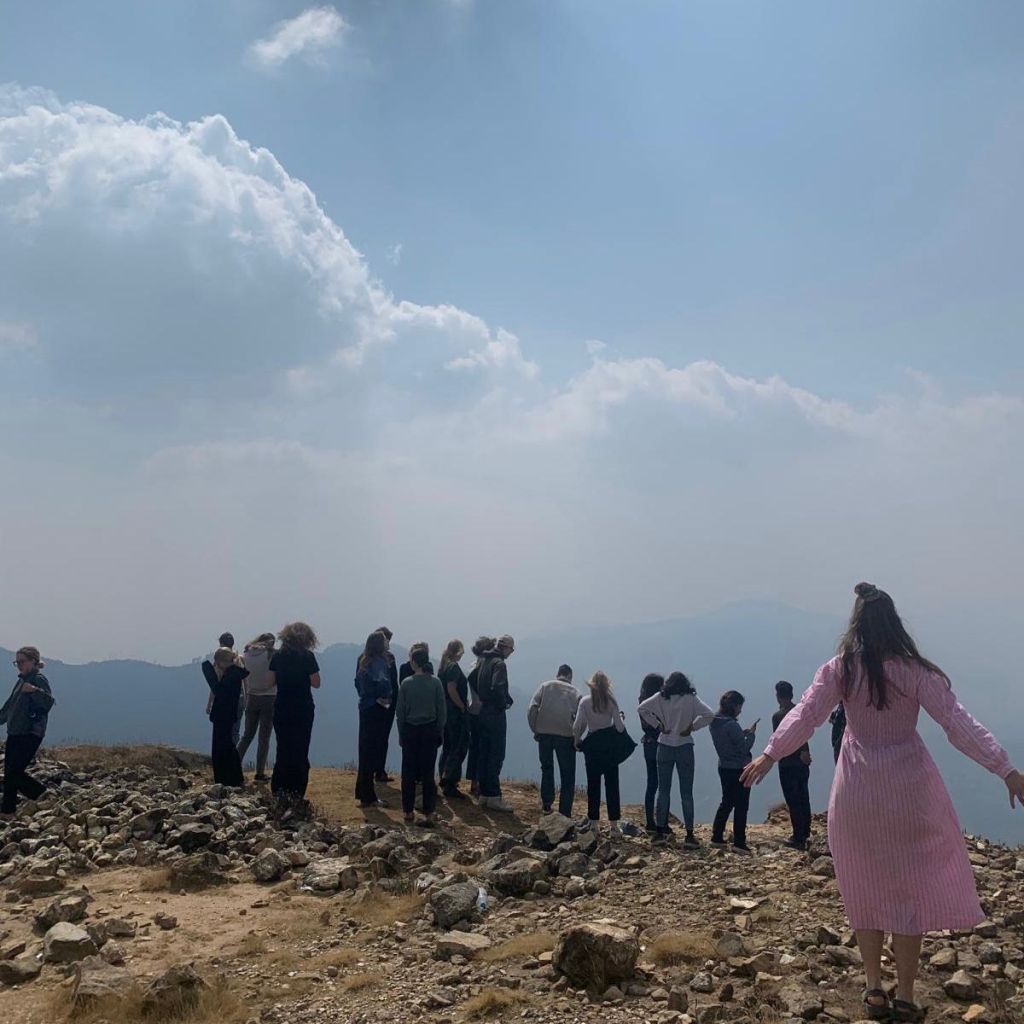
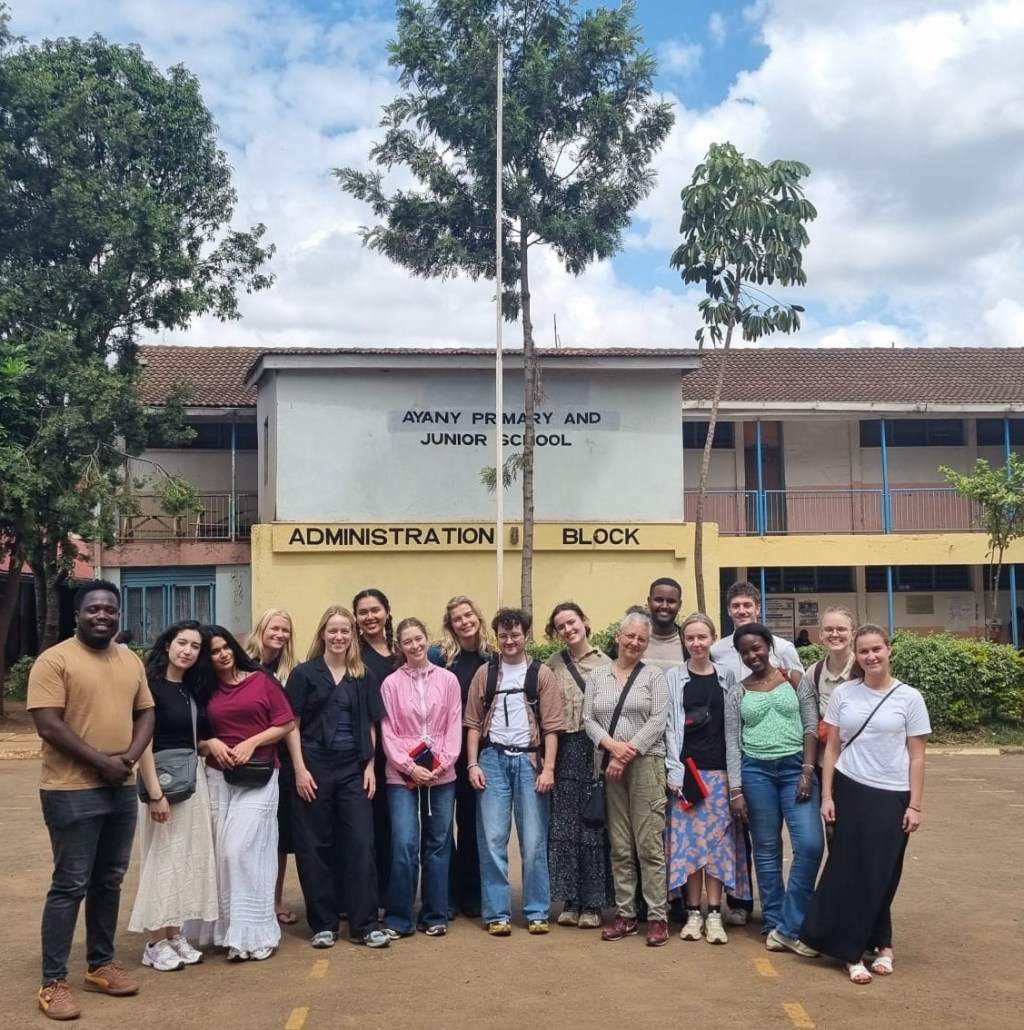
Mid-February 2024, all first year MSc Global Health students embarked on some global adventures, half of the class heading to Poland, while the other half flew to Nepal. As one can easily agree, studying Global Health, but remaining/enjoying education in one country all throughout the programme can barely be called Global Health. Therefore, all students completed a Country Exposure Course, a 4-week exchange to either Poland or Nepal, where they followed lectures on public health challenges in the hosting country, while completing a concept note for a research or intervention proposal in collaboration with Nepali academic supervisors or Polish NGOs.
But what does it mean to be a student of a global programme when they step out of their comfort zone, and really start asking critical questions about what health means in a global context? With the majority of students from Europe studying at the ‘elite’ University of Copenhagen, we certainly carry some prejudices with us in these new settings. Similarly, our hosts will have certain ideas of who we are, and what we are able to bring into the countries. Where does health start, and where does it end? Which inequalities exist in health? And can we truly visit these sites with a decolonised mindset?
Students, now returned from the visits, reported their reflection notes as part of the exam requirement. Anonymously, we have asked the students to share their more critical and honest thoughts on what these country exchanges have meant to them.
Short overview of both programmes:
Nepal: In the small city of Dhulikhel, students were hosted by Dhulikhel Hospital to enjoy a 4-week programme of lectures on Nepal’s health challenges and – victories. In the afternoons, students collaborated with a local academic supervisor to draft up a concept note, ranging from topics like dengue virus and school nurses to mental health and cardiovascular diseases.
Poland: The other students were transported from the city landscapes of Warsaw to the skyline of Krakow, following 4-weeks of lectures and excursions on Poland’s health challenges and victories, such as HIV clinics, obstetrics facilities, elderly homes & sexual health centres, while collaborating with NGOs to write up a concept note.
Self-reflection & Cultural Shocks

SNIPPET #1: Thoughts on being both a student and a tourist:
During my time in Nepal, I also reflected in various ways on my position there as both a student and as a tourist. [..] Whenever my classmates and I went to Kathmandu, we stayed in a cute hostel, the Yakety Yak, in Thamel, the tourist district. There, we often talked with a young man named Kunga who worked at the front desk. He told us about Kathmandu, Thamel, and the tourism industry in Nepal. Walking around Thamel, we saw a bustling commercial hub, but Kunga told us that many of the shops, restaurants, and hotels in the area are actually owned by Chinese companies. I don’t know the extent of this, but it got me thinking about different forms of colonialism and control. Tourism is the largest contributor to Nepal’s GDP and the largest source of foreign income. The time that I spent as a tourist, and what I learned about tourism in Nepal, left me with many questions, including:
- To what extent do Nepali people profit off of tourism in Nepal, and how much of the profit is actually going to foreign companies?
- How ethical and sustainable is it to have an economy that is largely dependent on tourism? What are other viable, sustainable options for the Nepali economy, and what needs to happen for them to become reality?
- How do I personally square my participation in, and enjoyment of, a tourism industry that is largely unsustainable and sometimes exploitative?
SNIPPET #2: Hope for positive change
When speaking to Nepali people about Nepal, I felt inspired by their tone. Many acknowledge previous issues and challenges, such a child marriage, neonatal deaths, lack of opportunities, however, they always spoke about the progress the country has made. It quickly becomes clear that the country has been working really hard to change for the better, supporting its people, and motivated to continue to grow. First of all, this was quite refreshing, since I think our society tends to have quite a negative outlook on the future. Secondly, whether it’s high- or low-to-middle income countries focusing on change and progress, this has also shown me that each country should receive an equal level of trust and belief in the capability to improve.
SNIPPET #3: Poland & its queer community
I was surprised to find that the gay community was more vibrant and visible than I anticipated. I saw queer couples walking hand-in-hand on sidewalks, gender non-conforming individuals being able to use public transport, and the occasional pride flag flying outside of a cafe. As I danced at a gay club one night, I was overjoyed seeing people being what many political leaders in their country despise: themselves. It made me think of those I love back home, dancing in a space of safety and getting to be free together, even if just for a night. This realisation, in some ways, made me wonder if I had overly victimised the queer community in Poland. However, despite these positive interactions, I learned about the hostility towards queer people from our visit at LAMBDA. It did not surprise me to hear that the organisation was banned from providing education in public schools, but it did excite me to hear that the youth and teachers were angry about it. I wanted to hear LAMBDA say that the new government was sure to bring change, but I also understood and respected their cautious attitudes.
Women and health

SNIPPET #4: Thoughts on improving the world, and if we should do that through health
The main focus of our group project shifted throughout the first few weeks, and another small literature search that I did in the second week looked into child marriage prevention strategies. I was very upset by what I learned. I am not usually very emotional about the often heavy topics that we discuss in this program, but I was on the verge of tears when discussing my findings with my group (this was a group meeting, not with our advisor). Before this research, I had no idea how prevalent child marriage is worldwide, and how disproportionately it impacts girls. A UNICEF report I found said that 1 in 5 girls worldwide will be married each year, and girls are 6 times more likely to be married as children than boys are. This imbalance in the numbers means that most child brides are married to adult men. Nepal has very high rates of child marriage, and it was just a lot for me to process as I was reading the literature. The next day, I was reflecting on my thoughts and feelings and wrote this:
“I think I can articulate some of my reaction to the child marriage reading yesterday: The extent to which girls and women are robbed of autonomy and opportunity is sometimes overwhelming, and at times I feel like I’m in the wrong field to address this problem. A common denominator for so many of the things that disproportionately impact girls and women and endanger their health and freedom is economic inequality or poverty. One of the primary drivers of child marriage worldwide is poverty, and I sometimes feel like I could have a more direct impact by working to improve economic conditions.”

SNIPPET #5: Abortion access
It was a similar story to that of my home country when learning about abortion access in Poland. The founder from FEDERA put it so blatantly: “Poland won its place in Europe for the cost of women’s rights”. She was referencing the Catholic church’s agreement to join the EU if the Polish government agreed to restrict the abortion law in 1989. Learning about the women who died or were prosecuted from attempting at home abortions made my stomach tie up in knots and tears swell in my eyes. “The parliament is like a TV show”, she said, and I agree. It is one you watch from a distance with disbelief, until the lousy decisions made on that show impact you or someone you love. Then, it is never more real.
SNIPPET #6: Thoughts on Female Community Health Volunteers
Perhaps the most inspiring or successful policy/intervention that we learned about is the programme of Female Community Health Volunteers (FCHVs). Since the 1960s, Nepal has seen a remarkable increase in life expectancy, decrease in communicable diseases, and decrease in maternal & child mortality. Some of this improvement is almost certainly due to the FCHV program.[..] I think the FCHV program exists at a complicated intersection between working with women who care deeply about their communities and are making an incredibly valuable contribution, while also working in a resource-constrained setting, with a dependency on the unpaid labour of women. [..] I simply cannot square this. Non-monetary benefits will not clothe and feed the FCHVs and their families. Further, if this incredibly valuable and transformative labour was performed by men, or maybe by Western women, I do not believe that we would see influential academic and government institutions insisting that it should remain unpaid.
SNIPPET #7: Cultural perceptions on (underage) marriages
The encounters I had with societal challenges, such as underage marriage, reminded me of the complex interplay between the systemic injustices and individual realities of healthcare. These experiences prompted thoughts about how traditional global health practices may further entrench the status quo and highlighted the need for a more holistic, nuanced approach.
SNIPPET #8: Red is the colour of… marriage
After a while, I started to notice how a lot of the women were wearing red. I think at home it’s a colour a lot of people don’t wear, at least not this often so I started to wonder what it was a symbol of. We asked one of the professors and he said it is a symbol of marriage. After this, I started to notice how heavily you show you are married, which women do both the red clothes and the red dot on the forehead. It seems like it is really a status symbol to be married and it is something you are proud of. I am used to people only showing it with a ring on their finger, and some don’t even have a ring.
International Exchanges & International Funding
SNIPPET #9: Students, tourists or donors?
As rumours swirled that University of Copenahgen pays Dhulikhel Hospital for our visit, the relationships we had with Dhulikhel Hospital and its staff were put into question. It was an uncomfortable feeling knowing that our presence was accepted on the back of a paycheck and our visit transactional. The mention of money added a lingering sense of unease and sparked questions about the authenticity of our visit, as we were toured around the hospital grounds it made me wonder, “were we seen as guests or tourists?”
SNIPPET #10: Students, tourists or donors?
I often felt, especially during the first week in Warsaw, that some organisations were trying to prove their civilization to us. After learning about the lack of international funding in Poland, I now understand this to have been a partial plea for funding. Yet, it still made me uncomfortable, as these particular moments were where the power differences became so vivid. I could not help but wish they could share their successes without these subtle pleas.
SNIPPET #11: Hospital representation
I also found it quite interesting how academic-focused Dhulikhel hospital was, and how research seemed almost a higher priority than practice […] I’m not saying the hospital is not providing valuable services, including to the rural areas through the outreach centres, but it sometimes seemed a little as if their priority was more to satisfy the wishes of international donors than the needs of the community.
Is this common in resource-limited settings, having to first pay attention to where you can get resources from rather than where they need to go? It certainly made me feel a little uncomfortable in my position as a student from a foreign country parachuting in and dropping another research project on the Nepali population. I would have loved to have an honest conversation with regular people about whether they ever feel like they’re guinea pigs for the West.
SNIPPET #12, Research imbalances around the world
About trying to do literature searches and find successful interventions but most of the research is coming out of HICs: I did a search for school nurse retention strategies and tried to focus mainly on LMICs, but most of the literature that I found on nurse retention came out of high-income settings like the USA, Australia, and the UK. Quite early in the process, I felt confronted with the concentration of research in high-income settings. In the case of nurse workforce retention, I found it difficult to apply lessons from a place like Australia because a major challenge to Nepal’s nursing workforce is that many nurses leave Nepal to work in countries like Australia.
Migration & reciprocity

SNIPPET #13: Brain Drain
With my friend’s family, we discussed how young people are moving from Nepal to seek options in other countries such as the United Kingdom, Canada, or the United States. There is even a “lottery” where you can win a visa to the US, which her sister won a few years back. For me, it is like people are winning “the American dream” which is for me, a scam. As a Danish woman with an American partner, I have found that there is no such thing as this, and people must fight hard to get a good stable life in the US. And even then, there is a lot of luck involved. I have been wondering what the reason behind young people leaving is. Is it the poverty, the lack of employment, or the search for a good education? I have not yet found the answer to this but maybe it is a mix of all the above.
SNIPPET #14: Migrant Health is Political
Walking through the streets of Warsaw and Krakow, it was almost impossible to miss Poland’s solidarity with Ukraine and the Ukrainian refugees. I was not necessarily taken aback to sense the seemingly warm and welcoming Polish attitude about Ukrainian migrants. Many European countries, also those known to have rigid immigration policies and anti-immigration attitudes have welcomed Ukrainian migrants fleeing Russia’s war with open arms, and rightly so. Providing migrants and refugees protection and access to services seems to be aligned with the self-proclaimed human rights-based values of the European Union. However, learning more about Poland’s anti-immigration stance during the last decade, especially in the context of migrant health, it became more and more clear that human rights and humanity may not always transcend borders, race and religions. While migrants and refugees wanting to enter Poland via the Belarus border were responded with a barbed wire, sending the clear message that they are not welcome, Ukrainian refugees received a special status upon entering, receiving access to the same rights and publicly funded services as Polish people, such as employment rights and access to free healthcare and treatment. I am aware that Poland is not the first country known to apply double standards in the context of migrants. However, the Polish context is an example of the extent of how politicised and discriminatory migrant health is in many countries.
SNIPPET #15: Passport Privilege
A thought that I kept coming back to during my time in Nepal was the immense privilege and ease of travel that I have because of my American passport, and the same goes for my European classmates. Many of the young Nepali people I spoke to expressed interest in studying or working in Europe, the U.S., and Australia, but the Nepali passport is one of the weakest in the world. They told us that the cost to get a visa to any of those countries is much too high for the average Nepali person to afford. In the first week at Dhulikhel Hospital, Dr. Ram Shrestha addressed the visiting students and told us that we would go back to Denmark and see it with new eyes, that we would be forever changed by what we witnessed and learned in Nepal. I agree with him, but a major unexpected takeaway for me is a new awareness of the inaccessibility of the Western world. I felt a persistent sense of discomfort knowing that I was visiting Nepal and then I would leave, and that most of the people I met and passed on the street do not have the same freedom of movement that I do. It’s not something that I had ever really considered before and it has impacted me deeply. I think that this country exposure course should be an exchange with Nepali students coming to Denmark, in whatever way that’s possible.


Leave a comment