Personal reflections from a Somali-Norwegian student
By Leyla Sacad
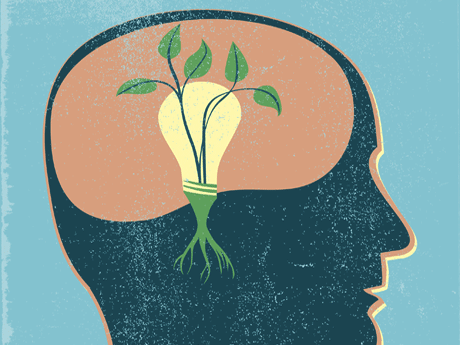
This is a short text highlighting reflections I’ve recently had on the “decolonizing global health” movement as a student from the Global North studying global public health while also being a child of immigrants. Decolonizing global health starts by looking within and decolonizing one’s own mind.
Introduction
Recently, I have crossed paths with the movement “decolonizing global health” almost daily. While decolonization has become a buzzword in the field of global health, it has captivated me. There is something intriguing about it – maybe because of the meaning it carries. Maybe it is so enticing to me because I used to view the world through rose-tinted glasses as a child and saw it as my mission to make it a better place. These days I find myself carrying the same aspiration and hope.
The term “decolonization” is, in a very broad sense, used to describe the act of eliminating the colonial experience and legacy (Binagwaho et al., 2022). Today, you might see different explanations of what the word means and the context in which it is used. In academia, for example, there is a movement to decolonize the curriculum (El Kadi, 2019). History lessons mainly focusing on events that have taken place in Europe, and reading lists consisting of scholars from the Global Minority World (often referred to as the Global North) are among the critiques. In middle and high school, I remember wishing that I learned more about history outside of the West. Another example is the movement to decolonize environmental justice, which critiques mainstream environmentalism for largely focusing on nature and ecology, without addressing how environmental changes can impact human lives (Guha & Alier, 1997, as cited in Álvarez & Coolsaet, 2018, p. 5).
Decolonization can mean so many things to so many people, as suggested by Seye Abimbola, previous Editor in Chief in BMJ Global Health (Pai, 2021). The breadth of the word makes it easy for us to attach different meanings to it, but my experience in my studies so far is that when there isn’t a standard definition of something, it can become difficult to explain what it is. To me decolonization means to dismantle the colonial structures of the past and create a system that is safe and fair for everyone. What does it mean to you?
I am a global public health student studying in Norway, where I was born and have been living ever since. I am the child of immigrants from Somalia, I am Muslim and I am Black. These identities place me in a category reduced to my outer appearance and give me labels. Even so, I have a privilege that I’ve acknowledged. Part of my privilege is growing up and having the opportunity to study at an institution in the Global Minority World. My perspectives on health and the world have largely been shaped by this. After finishing nursing school and working for a year, I wanted to study health in a broader sense: how health systems are built, global health challenges and how I can contribute. I did not choose to study global and public health to save helpless people in my parents’ motherland whom I have never met. They’re already equipped with the knowledge, expertise and experiences needed to attain self-determination and true decolonization, as a former colony. Decolonizing global health needs to be done by the people living in countries that have experienced colonialism directly, and not by the countries who colonized.
Criticism of the decolonizing global health movement
This is one of the arguments used to criticize the decolonizing global health movement, and with good reason (Anand & Pai, 2023). I have observed that the voices speaking loudest on decolonization, mainly come from the Global Minority World. There is nothing inherently wrong with this, but it poses a few questions. It can become problematic when universities in the Global Minority World are hosting conferences on how to decolonize global health and invite people who are not from the Global Majority World to speak on matters concerning them (Pai, 2021). There is a fear of decolonization becoming co-opted and turned into a theoretical framework, incorporated into the very system it wants to dismantle, something referred to as “elite capture”, rather than real and radical systemic change. Researchers from the Global Majority World are expressing concern with the way the word is being used today (Pai, 2021).
Diversifying is not decolonizing
The words diversity, equity and inclusion are examples of other buzzwords today. They’re emphasized on Norwegian job applications, and everyone is talking about it. Being a Muslim, Somali and a Black woman it made me feel seen and appreciated, and still does to some extent, but I’ve realized that a seat at the table doesn’t do much if the table isn’t shaped to listen to and truly consider everyone present. Diversifying without adapting to the needs of the people is not beneficial and teeters on the edge of tokenism, which describes a practice of using an individual as a symbol for diversity without appreciating their efforts and challenging existing power structures (CultureAlly, n.d.). Nobody wants to feel like they have a seat at the table only because of how they look. The same goes for the global health field and decolonizing global health; decolonization should not only be included because it looks or sounds good. Diversifying is not decolonizing (Engebretsen & Baker, 2024). Decolonizing is about understanding how current power structures are made to oppress certain groups of people and changing these (Loach, 2024).
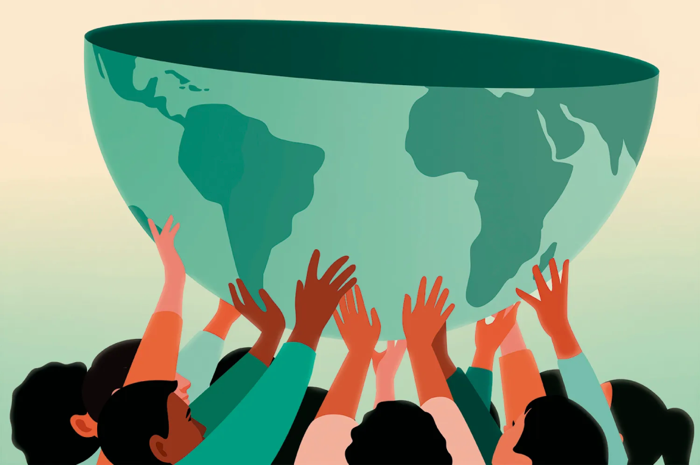
What we can do as global public health students from the Global North
I keep learning more and more about what is wrong with the world, and each time, I can feel the rose color on my glasses fade away little by little. It is a little bit different now. Though I have experienced bouts of sadness, I am now regaining my hope – the color is returning. While my impact may not be direct, I can still contribute from this tiny cold place up north. Decolonizing global health starts with decolonizing one’s mind. Do not lose hope or give in to pessimism. Ask yourself if there are small things you can do, such as sharing what you’ve learned about this movement with your classmates, or organizing a webinar, if you are able, where you include the voices of those that need to be in the forefront of this.
One of my professors mentioned something in a lecture a few months ago that has stuck with me ever since. She said that «local is global» and this short statement holds a lot of meaning for me. The term “glocal” is mostly used in business, sociology and urban planning and describes the interconnection between global and local (Anand & Pai, 2023). Instead of looking for problems abroad that need to be «solved», I will start in my local community because suffering and health inequalities are not limited to low- and middle-income countries. They exist where I am as well. White saviorism isn’t limited to white skin, it’s a way of thinking, a mindset. I believe I can still develop and act on that mindset even as a Black person, because I come from the Global North. I hate the thought of that. It can be harmful.
What I am doing, and what we can do as students from the Global North is to reflect. Reflect on our position, our intentions and what we want to put forth. We have to fight against any lurking thoughts of saviorism creeping in. One of my new favorite podcasts Global Health Unfiltered has an episode where Catherine Kyobutungi, the Executive Director of the African Population and Health Research Center, prompts student listeners to ask themselves questions on these matters (Jumbam et al., 2023). Why are we in the global health field? Do we want to travel overseas and save some people who don’t even know us? Are we studying to become saviors? If you’re going to do research in the Global South, you need to ask yourself if your research will be of benefit to the people you’re interviewing and the country that welcomes you as a guest. Will it bring good, or do harm? I think reflecting on these matters can help us avoid developing a savior complex. However, the responsibility is not solely ours as students.
Conclusion – change takes time
Our universities are responsible for preparing us to enter the global public health field and decolonizing global health means looking at today’s curriculum and examining who it is benefiting. If the cycle isn’t stopped while we’re sitting in the classroom, then society will just keep producing colonial practice (Silberner, 2022). As global health students from and in the Global North we can take individual steps to decolonize our minds first and foremost and carry our reflections with us as we enter the field, but we can’t shoulder the responsibility of decolonizing the field by ourselves. It requires systematic change and discomfort.
Decolonizing global health is urgent. We have to prevent it from becoming a buzzword, but even more important: we have to be inspired and take action. It’s not too late.
References
Álvarez, L., & Coolsaet, B. (2018). Decolonizing Environmental Justice Studies: A Latin American Perspective. Capitalism Nature Socialism, 31, 2020(2), 50–69. https://doi.org/10.1080/10455752.2018.1558272
Anand, S., & Pai, M. (2023). Glocal is global: Reimagining the training of global health students in high-income countries. The Lancet Global Health, 11(11). https://doi.org/10.1016/S2214-109X(23)00382-0
Binagwaho, A., Ngarambe, B., & Mathewos, K. (2022). Eliminating the White Supremacy Mindset from Global Health Education. Annals of Global Health, 88(1), 32. https://doi.org/10.5334/aogh.3578
CultureAlly. (n.d.). What Is Tokenism? CultureAlly. Retrieved April 24, 2025, from https://www.cultureally.com/blog/what-is-tokenism
El Kadi, T. H. (2019, March 12). How diverse is your reading list? (Probably not very…) – Africa at LSE. Africa at LSE – LSE’s Engagement with Africa. https://blogs.lse.ac.uk/africaatlse/2019/03/12/how-diverse-is-your-reading-list-probably-not-very/
Engebretsen, E., & Baker, M. (2024). The Rhetoric of Decolonizing Global Health Fails to Address the Reality of Settler Colonialism: Gaza as a Case in Point. International Journal of Health Policy and Management, 13, 8419. https://doi.org/10.34172/ijhpm.2024.8419
Jumbam, D., Amaoko, E., Kanmounye, U., & Bediako, Y. (Directors). (2023, August 12). Decolonizing Our Minds With Dr. Catherine Kyobutungi (No. 8) [Apple Podcasts]. In Global Health Unfiltered. https://podcasts.apple.com/au/podcast/decolonizing-our-minds-with-dr-catherine-kyobutungi/id1605557435?i=1000624253761
Loach, M. (2024). It’s Not That Radical—Climate Action to Transform Our World. Dorling Kindersley.
Pai, M. (2021, July 22). Decolonizing Global Health: A Moment To Reflect On A Movement. Forbes. https://www.forbes.com/sites/madhukarpai/2021/07/22/decolonizing-global-health-a-moment-to-reflect-on-a-movement/
Silberner, J. (2022, April 15). 4 Ways to Decolonize Global Health | Hopkins Bloomberg Public Health Magazine. Hopkins Bloomberg Public Health. https://magazine.publichealth.jhu.edu/2022/4-ways-decolonize-global-health
Figure 1: https://adaiad.wordpress.com/2017/05/16/how-to-recognize-if-your-date-has-a-growth-mindset/



Leave a comment