By Katrina Messiha and Lea Rahel Delfmann
How does co-creation manifest in practice? We applied a recent five-dimensional framework to explore how academics and co-researchers co-adapt public health interventions to local realities – and the implications of this for evidence-based co-creation.
Co-creation is a popular approach, signalled by a growth in co-created products, services and interventions and entailing active collaboration and innovative problem-solving among key and various stakeholders across research stages (e.g., from problem identification to evaluation). Co-creation is concerned with the democratisation of research and bridging research with practice – thereby addressing complex public health issues in taking into account the unique needs and perspectives of relevant stakeholders. In this vein, co-creation is a promising way of developing interventions or programme that can aid with public health issues. One of these issues is teenagers’ sleep. Around the world, adolescents are falling short of the recommended eight hours a night. Moreover, many report trouble falling asleep, waking up during the night and struggling with daytime sleepiness. While there are several contributing factors, modern life – especially the rise of screen time and social media – has transformed the way young people live, connect, and, unfortunately, sleep. In fact, trends over the past few decades show a decline in both the quantity and quality of adolescent sleep. That is where co-creation comes in. By involving young people directly in shaping sleep health solutions, we can move beyond one-size-fits all advice and begin to address the real-life challenges teenagers face.
Can Teens Help Design Their Own Sleep Health Programme?
Five years ago, a sleep health programme was co-created with adolescents. Fast forward to now and imagine a group of 11–15 year olds helping adapt that very programme to better fit their lives today. This is co-creation in action – more specifically, co-adaptation: tweaking an already co-created intervention so it remains relevant, engaging and effective. Why is this important? Because real-life health challenges, like poor teen sleep, do not stay static – and neither should our solutions. Instead of relying solely on researchers to decide what is best, co-adaptation can ensure that everyone’s ideas matter. This is what we tried to achieve in a recent project in Flanders, Belgium, where students, parents, teachers and researchers came together to collaboratively adapt a school-based healthy sleep intervention to make sense in their here and now.
In autumn 2022, we launched a series of participatory workshops at a local secondary school. Guided by a step-by-step planning framework, we worked with a student action group of eight diverse teens – five girls and three boys from different academic tracks, including general and technical education. With the help of a supportive teacher, we made sure the group included a mix of personalities, from quieter thinkers to more outgoing voices.
For around six months, this group met for eleven sessions with two researchers. Together we explored students’ current sleep needs and habits, played brainstorming games and reviewed the original sleep programme materials step by step. The students did not just give feedback, they made decisions. They evaluated the original programme goals, aligned them with their current priorities and determined which activities to keep, tweak or drop altogether. We also knew that parents play a big role in shaping teens’ sleep routines, so we held three parent consultation sessions to gather their insights, concerns and suggestions. Teachers contributed their perspectives too and, importantly, helped developing a plan for implementation. By February 2023, we had co-adapted the existing sleep intervention with meaningful input from students, parents, teachers and researchers. The newly adapted programme was then piloted in the school setting. This process was not only about ensuring that the healthy sleep intervention fit current needs – it was also about creating a context in which young people felt they could shape their own health initiatives. However, such a process needs careful consideration to happen in a trustworthy manner.
Five Keys: How We Put Co-Creation into Practice
In research terms, our co-creation was guided by five dimensions (or “ingredients”) that make the process trustworthy. See Image 1: The Co-creation Process Dimensions (Messiha et al., 2025). When we looked across 27 academic articles that used theory to study co-creation in different sectors – like marketing, sustainability, public management and business – five key dimensions kept showing up. These dimensions help explain what co-creation actually involves in a way that is consistent across research fields, types of co-creation and with different uses of named theory. We explain such dimensions below and complement them with quotes/ examples.

Image 1: The Co-creation Process Dimensions (Messiha et al., 2025)
D1: Multi-stakeholder collaborative action: Refers to the collaboration of multiple actors/ co-creators (i.e. stakeholders). Such collaborations entail action(s) which includes, e.g., shared decision-making and the active engagement of different actors. Can result in commitment and ownership. For example, teens stated: “We all did something. It was not only us. And it also was not only you”. Moreover, teens stated that being actively engaged made them “more energetic for the day”.
D2: Co-learning towards innovation: Learning together during a dynamic, iterative and adaptive process. Linked to shared-problem solving, creativity and innovation. Further, co-learning towards innovation can result in stakeholder goal clarity and personal (actor) relevance – which can be enacted via collaborative feedback and mentoring. One example of how learning together resulted in goal clarity for teens is the following statement: “Now I try to pay more attention to what time I sleep. And when I know it’s already late, I kind of think, I’m not going to sleep as much as I would otherwise now”.
D3: Contextual knowledge production: Refers to the production of context-specific knowledge by integrating e.g., lived experience, specialist knowledge, theory-based knowledge and knowledge rooted in best practices. This extends to knowledge translation as a part of co-creation research. For example, a parent contributed their context-specific knowledge by stating: “I’m willing to find a compromise [about bedtime rules]. But whether it always really has to be in consultation [with the teen] – no. I don’t think so”.
D4: Generating meaning: Refers to all the ways in which co-creation can be meaningful to participants, e.g., the end product can be meaningful as it suits actors’ needs and interests and the process can be experienced or felt as meaningful due to social interaction and a sense of belonging. Sense-making can also be involved given that co-creators act as feelers, doers and thinkers as such co-creators engage in the co-creation process. For students in the healthy sleep project, meaning was largely created by them forming socially meaningful interactions: “We spent time together for a few weeks (…). You make friends and you dare to say more”.
D5: Open, trustful and inclusive dialogue: Refers to how the environment in which co-creation is happening is shaped. Captures interactions during sessions, e.g., whether actors show mutual respect and ethical aspects like transparency and addressing power relations. It is about prioritising the development of trusting and deeper relationships with co-creators as well as the free ability to articulate various opinions towards solutions. One teenager for example stated: “you really care about what we’re saying”.
Overall, these five elements were not just ideals on paper – they were real parts of our journey. In fact, the evaluation of our process showed all five dimensions clearly came through. Teens involved said they enjoyed collaborating and stayed committed to the project, kept learning new things each week and felt respected by the team. They used their own experiences to shape the activities and said the atmosphere was meaningful and respectful throughout.
We also found another dimension not originally contained as part of the framework. This dimension captures the contextual aspects that are unique to every research project. In our case it was closely linked to the adaptation and the school context in which the co-adaptation took place. For example, time constraints were present due to the limited number of sessions. Moreover, the co-adaptation process occasionally interfered with students’ other obligations connected to the school context (“maybe it’s better to have the next session during lunch, because now I always miss my planning lesson”). Regarding co-adaptation: While some students would have liked to be even more creative, they largely appreciated that they could build up on an existing intervention: “It was nice that we did not always have to think ourselves. That we already had some examples”.
Looking Back and Ahead
As reflected in the literature, co-creation took time and effort and it was far from always smooth sailing. Co-ordinating with busy school schedules was challenging and we realised that students not in the group felt excluded. But the benefits outweighed the hurdles. The students were more engaged than if we had handed them a finished programme. They helped us spot blind spots (for example, drastically cutting on sleeping in during weekends) and tested ideas that we researchers might never have thought of alone, such as a roundtable where teachers and students could talk about school stress.
If you are a teacher, a public health worker or a student reading this: consider how co-creation could work in your context. Co-creation can be a complex term to grasp – perhaps due to concept stretching and knowledge fragmentation – but at its heart it is about respect, curiosity and collaboration. By listening and learning from each other, we shaped a sleep programme that fits these teens’ world. Who knows what other innovations could emerge when we co-create? Therefore, we invite you to ask your community what you think is your most pressing need in society and look out for what is already out there to further shape together… The answers might surprise you – and might even start a good night’s sleep.
Keywords: co-creation, adolescent sleep health, participatory workshops, school-based intervention, stakeholder collaboration
About the authors:
Katrina Messiha is a Marie Skłodowska-Curie PhD fellow based at the VU University Medical Center in Amsterdam. As part of her PhD work, she aims to systematically establish theory-based principles for co-creation in public health. She is an early stage researcher at the EU Health CASCADE project, funded by Horizon 2020. Her research interests encompass improving health inequalities, achieving health promotion through co-creation, addressing “wicked problems” via research and policy development as well as advocating for inclusive, robust participatory research in public health.

Image 2: Author, Katrina Messiha
Lea Rahel Delfmann is a Marie Skłodowska-Curie PhD fellow based at Ghent University, Belgium and an early stage researcher at the EU Health CASCADE project, funded by Horizon 2020. Her PhD work encompasses the investigation of the added value of co-adaptation for school-based interventions. Her research interests include the promotion of adolescent health through co-creation and the scaling of interventions through co-adaptation with a focus on sleep health and mental health.
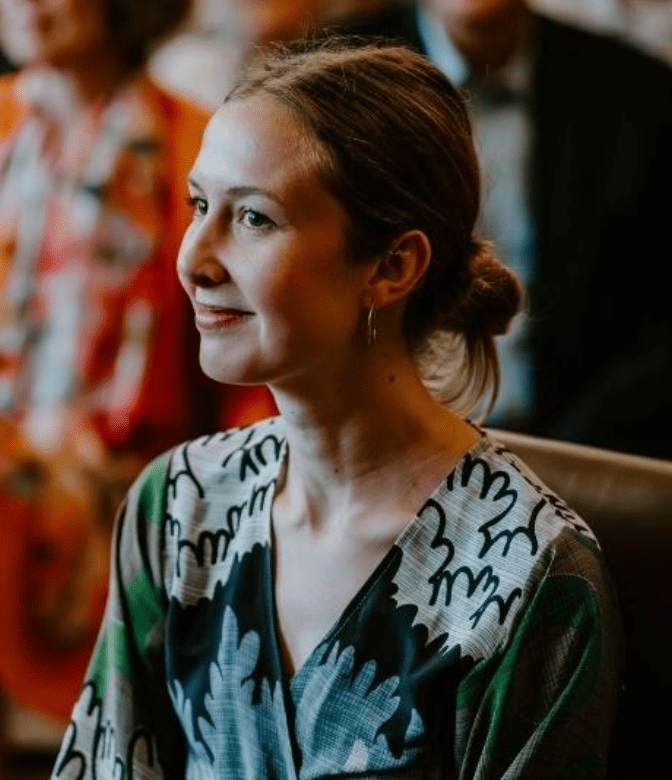
Image 3: Author, Lea Rahel Delfmann



Leave a comment