Maria outlines policies the Mexican government should adopt to improve the accessibility of menstrual products for adolescents. She demonstrates that this has the potential to reduce the stress and enhance the academic performance of girls, while breaking the stigma surrounding menstruation. Finally, Maria argues that prioritizing menstruation in the government’s economic and political agenda should involve a comprehensive approach: pairing access to period products, menstrual hygiene education and improved water and sanitation in schools.

Introduction: The Limited Menstrual Access in Mexico
All adolescent menstruators in Mexico deserve equal access to menstrual products, yet millions still face challenges obtaining the necessary products and hygiene facilities. Limited access to these products is an issue that affects girls across every state in the Mexican Republic. Evidence (1) from other countries suggests that poor access to menstrual products can have a detrimental impact on adolescents’ school attendance and academic performance.
According to a 2022 survey by UNICEF Mexico (2), 56% of adolescents, women and menstruating individuals do not have access to free menstrual products in their schools or workplaces. Additionally, UNICEF (3) reports that 3 out of 10 Mexican teenagers between 15 and 17 years old are not enrolled in school, and only 4 out of 10 teenagers living in extreme poverty continue their education after middle school. The lack of hygiene areas and menstrual products in schools may contribute to these low enrollment numbers. Unfortunately, around 43% (4) of girls prefer to stay home rather than attend school during their periods.
Barriers to Menstrual Hygiene Management
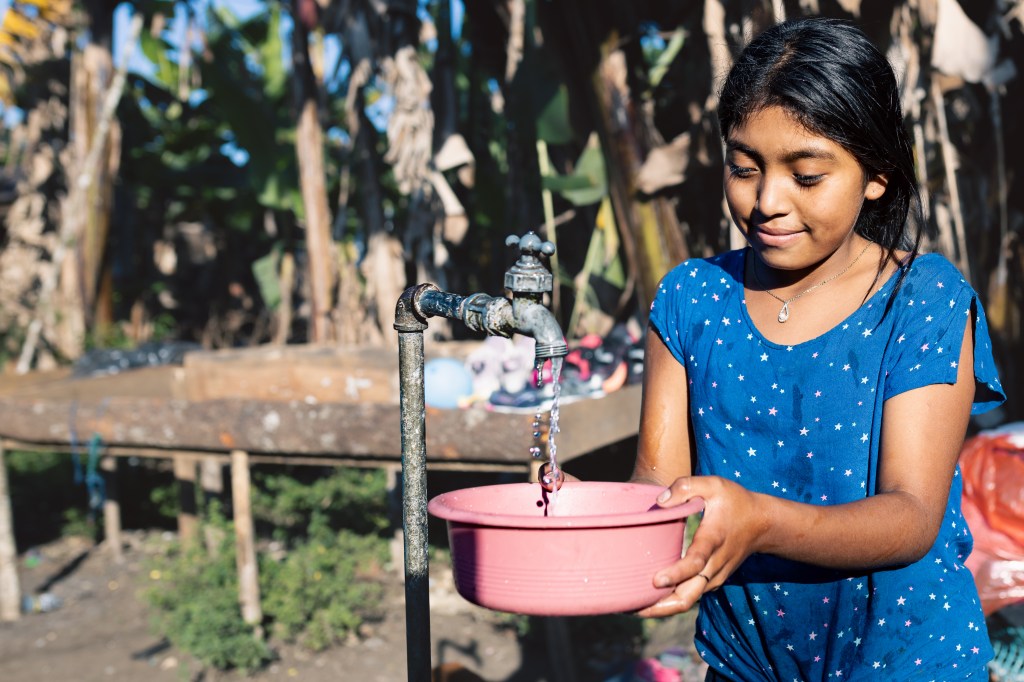
Access to education in rural areas of the country presents an additional concern: approximately 700,000 (5) children between the ages of 3 and 14 in these settings have no access to school. Adding to the challenge, 72 million (6) people in Mexico lack access to clean water, and 47 million lack access to adequate sanitation facilities. Poor access to water and sanitation makes menstrual hygiene management particularly difficult for adolescent girls and women. In addition, the water and sanitation situation in schools across the country is dire: only 62% (7) of schools have access to water every day, only 58% have access to any clean water at all, and 19% lack sufficient toilet facilities.
These worrisome statistics likely contribute to the high number of girls choosing to stay home during their periods and indicate that this is an urgent public health challenge in Mexico.
Consequences of Limited Period Product Access
Evidence from other countries across Latin America suggests that the lack of access to period products leads many low-income women to continue to use newspapers or rags as pads or tampons, which can have serious health consequences, such as urinary or other infections, and can result in expensive treatments. For example, a study in Brazil (8) highlighted that 20% of women in vulnerable communities lack access to menstrual products, leading to an increased tendency of unsanitary practices.
Current Government Actions and Improvements
In an effort to improve access to menstrual hygiene products, the Mexican government eliminated the value-added tax (VAT) on menstrual products (9) in January 2022. Unfortunately these products remain at exorbitant prices for low-income families, and can be a significant financial burden for individuals earning the minimum wage or less, especially when rent, food, and utilities take priority. According to the government of Mexico, the average woman’s lifetime expenses on period products are around 26,000 pesos (10), which seems absurd if we compare it to the minimum wage in Mexico, which is around 8,364 pesos monthly. The government has recommended (11) that women buy reusable menstrual cups to save money. However, these devices require the user to clean them several times daily before reinsertion and are therefore not practical given the poor sanitation and access to clean water that exists in so many schools and rural areas of Mexico.
Another initiative implemented by the government to support low-income families is a basic basket (12), which is a share of goods and services considered essential for a family’s well-being and is offered by the government in community stores. However, this is a missed opportunity to support women and girls because period products are not included. This exclusion suggests that the government considers them to be luxury items, and also demonstrates the ongoing taboo of menstruation in Mexico.
Positive Strategies and Implementations
To look for positive and feasible examples of how the government can make menstrual products universally available to adolescent girls, we don’t need to look very far. Since 2021, the Mexican state of Michoacán (13) has been offering free menstrual products within public schools. The groups Mestruación Digna México, Colectiva Feminista MAPAS, Vulva Sapiens, led the movement that pressured the government into passing a law of free access to period items. The Michoacán government has also provided funding that supports education (14) on menstruation. Providing these products free at schools, and education about the importance of menstrual hygiene management, supports greater gender equality, giving girls the tools they need to succeed just as much as their male classmates.
Other Latin American countries have implemented relevant activities that Mexico should consider as well. In Brazil (15), teachers are trained to include menstrual education within their curricula. Moreover, the government has distributed menstrual products to 24 million (16) people in vulnerable areas of the country, including health centers, schools and prisons. This strategy has the potential to reach adolescent girls whether or not they are enrolled in school. Similarly, Uruguay (17) has introduced a noteworthy strategy involving workshops on menstrual health and delivery of period kits in community spaces. The government of Mexico could replicate this by organizing similar activities throughout rural areas of the country; ensuring that hygiene and menstrual education is easily obtainable and understandable to all.
Potential Impact of Solutions
The potential impact of strategies such as these to improve the health, education and well-being of adolescent girls in Mexico is tremendous. Given that the average age of menarche (18), referring to the first menstrual period, in Mexico is 12 years and the estimated (19) number of female adolescents between the ages of 10 and 19 is around 11 million, improving access to period products has the potential to impact millions of adolescents. As a menstruating person, a natural process should never be made more difficult by society and the government’s inaction. No girl’s education should be compromised by absences caused by a lack of basic menstrual products and hygiene facilities, barriers that adolescents did not enact.
While the government can implement strategies to improve access to period products and education on menstruation immediately, it should also consider longer-term efforts that ensure universal access to clean water and sanitation facilities in schools and in communities. These investments can benefit menstruating girls in particular, as they can improve their academic performance (20), reduce stress (21) and reduce the common taboo of menstruation (22), but they will also benefit all adolescents, whether male or female.
Conclusion: Ensuring Dignity and Equality
Mexico has made some tremendous strides in gender equality, demonstrated most recently by the election of President Claudia Sheinbaum, whose campaign catchphrase was “It’s time for women.” (23) If Mexico implements policies that expand critical access to menstrual products, education on menstruation and water and sanitation infrastructure, it can prove that it also believes “It’s time for adolescent girls.”
Citations:
1. Team Thinx. State of the Period 2021 [Internet]. New York: Thinx; 2021 Jun 3 [cited 2025 May 27]. Available from: https://www.thinx.com/blogs/periodical/state-of-the-period-2021
2. UNICEF Mexico, Essity, Menstruación Digna México. Primera encuesta nacional de gestión menstrual en México [Internet]. Mexico City: UNICEF Mexico; 2022 Oct [cited 2025 May 27]. Available from:
https://www.unicef.org/mexico/media/7576/file/Primera%20encuesta%20nacional%20de %20gesti%C3%B3n%20menstrual%20en%20M%C3%A9xico.pdf
3. UNICEF Mexico. School attendance [Internet]. Mexico City: UNICEF Mexico; [date unknown] [cited 2025 May 27]. Available from:
https://www.unicef.org/mexico/asistencia-la-escuela
4. UNICEF Mexico. Higiene menstrual [Internet]. Mexico City: UNICEF Mexico; [date unknown] [cited 2025 May 27]. Available from:
https://www.unicef.org/mexico/higiene-menstrual
5. Poy Solano L. Sin acceso a educación, al menos 700 mil niños en zonas rurales [Internet]. La Jornada. 2023 Nov 5 [cited 2025 May 27];p.13. Available from: https://www.jornada.com.mx/2023/11/05/politica/013n1pol
6. Water.org. Mexico’s water and sanitation crisis [Internet]. Kansas City (MO): Water.org; [date unknown] [cited 2025 May 27]. Available from:
https://water.org/our-impact/where-we-work/mexico/
7. UNICEF Mexico. Agua, higiene y saneamiento [Internet]. Mexico City: UNICEF Mexico; [date unknown] [cited 2025 May 27]. Available from:
https://www.unicef.org/mexico/agua-higiene-y-saneamiento
8. de Oliveira VC, Pena ÉD, Andrade GN, Felisbino-Mendes MS. Menstrual hygiene access and practices in Latin America: scoping review. Rev Lat Am Enfermagem. 2023 Oct 23;31:e4029. doi: 10.1590/1518-8345.6736.4029. Available from: https://pmc.ncbi.nlm.nih.gov/articles/PMC10594935/
9. Cruz P. Menstruation must not remain taboo [Internet]. D+C – Development and Cooperation. 2023 Jan 27 [cited 2025 May 27]. Available from:
https://www.dandc.eu/en/article/menstruation-must-not-remain-taboo
10. Gobierno de México. Procuraduría Federal del Consumidor (PROFECO). Vigilará Profeco precios de productos de gestión menstrual [Internet]. Ciudad de México: Gob.mx; 2022 Jan 5 [cited 2025 Jun 27]. Available from: https://www.gob.mx/profeco/prensa/vigilara-profeco-precios-de-productos-de-gestion-menstrual?idiom=es
11. Procuraduría Federal del Consumidor (Profeco). Profeco presents sustainable options for menstrual management [Internet]. Mexico City: Government of Mexico; 2025 May 17 [cited 2025 May 27]. Available from: https://www.gob.mx/profeco/prensa/profeco-presenta-opciones-sustentables-para la-gestion-menstrual?idiom=es
12. Pluxee Mexico. What are the products in the basic basket? Complete list [Internet]. Mexico City: Pluxee; 2025 Apr 14 [cited 2025 May 27]. Available from: https://www.pluxee.mx/blog/productos-canasta-basica/
13. Infobae. Michoacán is the first state to approve the Dignified Menstruation Law; sanitary pads and tampons will be free in schools [Internet]. Buenos Aires: Infobae; 2021 Mar 3 [cited 2025 May 27]. Available from: https://www.infobae.com/america/mexico/2021/03/03/michoacan-es-el-primer-estado-en aprobar-ley-de-menstruacion-digna-toallas-sanitarias-y-tampones-seran-gratuitos-en-es cuelas/
14. AD Noticias. Michoacán Congress approves free menstrual products in schools [Internet]. Mexico City: AD Noticias; 2021 Mar 2 [cited 2025 May 27]. Available from: https://adnoticias.mx/aprueba-congreso-de-michoacan-gratuidad-en-productos-para-la menstruacion-en-las-escuelas/?noamp=mobile
15. TV Aurora. To combat menstrual poverty, Recife creates the “Ciclo de Cuidado” program [Internet]. Recife: Folha PE; 2021 Mar 3 [cited 2025 May 27]. Available from: https://www.folhape.com.br/colunistas/tv-aurora/para-combater-a-pobreza-menstrual-reci fe-cria-o-programa-ciclo-de-cuidado/25593/
16. La Diaria. Brazil: government launches menstrual health program guaranteeing free pads for women in vulnerable situations [Internet]. Montevideo: La Diaria; 2023 Jul 10 [cited 2025 May 27]. Available from: https://ladiaria.com.uy/feminismos/articulo/2023/7/brasil-gobierno-lanzo-programa-de-sal ud-menstrual-que-garantiza-toallitas-gratuitas-a-mujeres-en-situacion-de-vulnerabilidad/ #:~:text=El%20gobierno%20brasile%C3%B1o%20puso%20en,en%20situaci%C3%B3n %20de%20vulnerabilidad%20social.
17. Mazzarovich S. Montevideo City Hall launches Menstrual Management + Equality + Inclusion project [Internet]. Montevideo: Montevideo City Hall; 2023 May 25 [cited 2025 May 27]. Available from: https://montevideo.gub.uy/noticias/genero/se-lanza-proyecto-de-gestion-menstrual-igual dad-inclusion
18. Torres-Mejía G, Cupul-Uicab LA, Allen B, Galal O, Salazar-Martínez E, Lazcano-Ponce EC. Comparative study of correlates of early age at menarche among Mexican and Egyptian adolescents. Am J Hum Biol. 2005 Sep-Oct;17(5):654-8. doi:10.1002/ajhb.20420. PMID: 16136537.
19. UNICEF Data. How many children under 18 are there in Mexico? [Internet]. New York: UNICEF; [cited 2025 May 27]. Available from:
https://data.unicef.org/how-many/how-many-children-under-18-are-there-in-mexico
20. Andargie FA, Tinuola FR. Effects of school menstrual hygiene management, water, sanitation, and hygiene interventions on girls’ empowerment, health, and educational outcomes: Lasta district, Amhara regional state, Ethiopia. PLoS One. 2025 Apr 28;20(4):e0321376. doi: 10.1371/journal.pone.0321376.
21. Macours K, Vera Rueda J, Webb D. Addressing menstrual stigma and hygiene to improve education and psychosocial well-being among adolescent girls in Madagascar [Internet]. Cambridge: Abdul Latif Jameel Poverty Action Lab; 2024 May 27 [cited 2025 May 27]. Available from: https://www.povertyactionlab.org/evaluation/addressing-menstrual-stigma-and-hygiene-i mprove-education-and-psychosocial-well-being
22. World Bank. Menstrual health and hygiene [Internet]. Washington, DC: World Bank; [cited 2025 May 27]. Available from: https://www.worldbank.org/en/topic/water/brief/menstrual-health-and-hygiene
23. Zissis C. Why Mexico picked a woman president first: Claudia Sheinbaum. Foreign Policy [Internet]. 2024 Nov 15 [cited 2025 May 27]. Available from: https://foreignpolicy.com/2024/11/15/why-mexico-picked-a-woman-president-first-claudia -sheinbaum/


Leave a comment